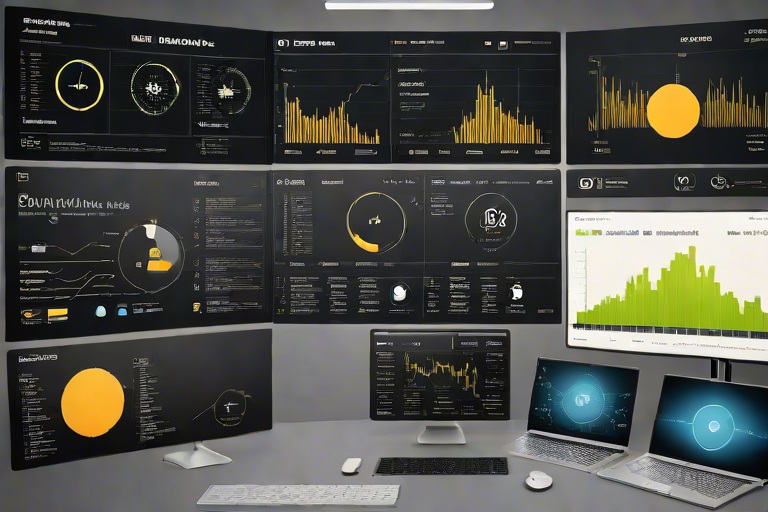
How auditing the crawl budget helped an e-commerce site index 10,000 new products

The Mechanics of Crawl Budget in Enterprise E-commerce
Crawl budget is the finite amount of resources a search engine allocates to an individual website over a specific period. For enterprise e-commerce platforms, which often manage hundreds of thousands of SKUs across complex category hierarchies, this resource allocation becomes a critical bottleneck for growth. When Googlebot or Bingbot encounters millions of potential URLs due to faceted navigation and dynamic filtering, the efficiency of its crawl path determines whether new product pages are discovered in hours or ignored for weeks.
The fundamental challenge lies in the disparity between total available URLs and indexable value. In a typical large-scale e-commerce environment, "crawl waste" occurs when search engines spend their limited budget on low-value assets such as session IDs, sorting parameters (price high to low), or redundant filter combinations. When these non-essential pages consume the majority of the crawl budget, legitimate new product additions are pushed further down the priority queue, leading to significant indexation lag.
- Crawl Rate: The number of requests a bot makes per second or minute based on server capacity.
- Crawl Demand: The frequency with which search engines believe content needs to be updated.
- Indexation Velocity: The speed at which newly discovered URLs are processed and added to the index.
- Faceted Navigation: Dynamic filtering systems that can generate an exponential number of unique but redundant URLs.
Identifying Waste through Systematic Log File Analysis
The first step in resolving a massive indexation gap is moving beyond surface-level tools like Search Console and diving into raw server log files. While console reports provide aggregated data, they often lag by several days. Server logs offer an empirical, real-time record of every request made by search engine bots, allowing analysts to pinpoint exactly where the crawl budget is being squandered.
In a recent enterprise audit, analysis revealed that 65% of all bot requests were targeting URLs generated by faceted navigation filters. These pages provided no unique value and often contained identical product lists in different sorting orders. Because these URLs are technically reachable via internal links, the bots continued to follow them, effectively trapping themselves in "crawl loops." This meant that while the site had 10,000 new products waiting for discovery, the bot was preoccupied with crawling thousands of variations of a "Blue Cotton T-Shirt" filter.
- Request Distribution: Analyzing which directories receive the most bot hits relative to their conversion value.
- Response Time Analysis: Identifying slow-loading endpoints that trigger a reduction in crawl rate.
- URL Patterning: Grouping URLs by parameters (e.g., ?sort=, ?price=) to quantify total waste volume.
- Error Rate Monitoring: Tracking the percentage of non-200 status codes encountered during bot sessions.
Strategic Optimization for Indexation Velocity
To facilitate the indexing of 10,000 new products rapidly, a strategy of "aggressive pruning" must be implemented. The goal is to steer search bots away from low-value noise and toward high-intent product pages. This begins with an optimized robots.txt file that explicitly disallows access to known waste patterns without blocking the ability for those pages to pass PageRank or link equity.
A more sophisticated approach involves managing faceted navigation through a combination of "noindex" tags and canonicalization. While robots.txt prevents crawling, it does not necessarily prevent indexing if other sites link to those URLs. By implementing a strict canonical strategy, the site tells search engines that while multiple versions of a filtered page may exist, only one primary version should be considered for indexation. This consolidates authority and reduces the number of unique entries the bot needs to track.
- Parameter Handling: Using "noindex" tags or robots blocks to eliminate redundant filter combinations from the crawl path.
- Sitemap Partitioning: Breaking large sitemaps into smaller, focused files (e.g., product-news.xml) for faster processing.
- Internal Link Optimization: Reducing click depth by adding direct links from high-authority category pages to new SKUs.
- HTTP Header Tuning: Optimizing server compression and caching headers to reduce the time spent on each single request.
Measuring Impact and Maintaining Scalability
The success of a crawl budget audit is measured not just by the initial spike in indexed pages, but by the stability of indexation velocity over time. After implementing these optimizations for an e-commerce site, the primary metric to track is "Crawl Efficiency," defined as the ratio of successful 200 OK responses on canonical URLs versus total requests.
In a controlled environment, reducing crawl waste typically results in a noticeable shift in bot behavior. When search engines no longer spend time on redundant filters or redirect chains, they naturally redistribute those resources to previously ignored areas of the site. For an e-commerce entity adding 10,000 products, this often manifests as a reduction in "Discovered - currently not indexed" status within Google Search Console's Index Coverage report.
- Index Coverage Monitoring: Weekly audits of "Indexed" vs "Not Indexed" counts for specific product directories.
- Crawl Frequency Tracking: Using log analysis to ensure bots are visiting new products within 24-48 hours of publication.
- Latency Benchmarking: Ensuring server response times remain below a threshold (e.g., <200ms) to maintain high crawl rates.
- Regression Testing: Periodically scanning for "leakage" where new filter combinations begin appearing in the index.
Aquashield Roofing Corporation
4006 Morris Ct.
Chesapeake, VA 23323
Direct Line: 757-553-5191
GPS Coordinates: 36.755164, -76.353932
Virginia Beach Roofing Company - Roofing Service Virginia Beach VA, Roofing Contractor
585 S Birdneck Rd #106
Virginia Beach, VA 23451
Direct Line: +17576318100
Google Maps Plus Code: RXCX+V7 Virginia Beach, Virginia
GPS Coordinates: 36.822156, -76.001565